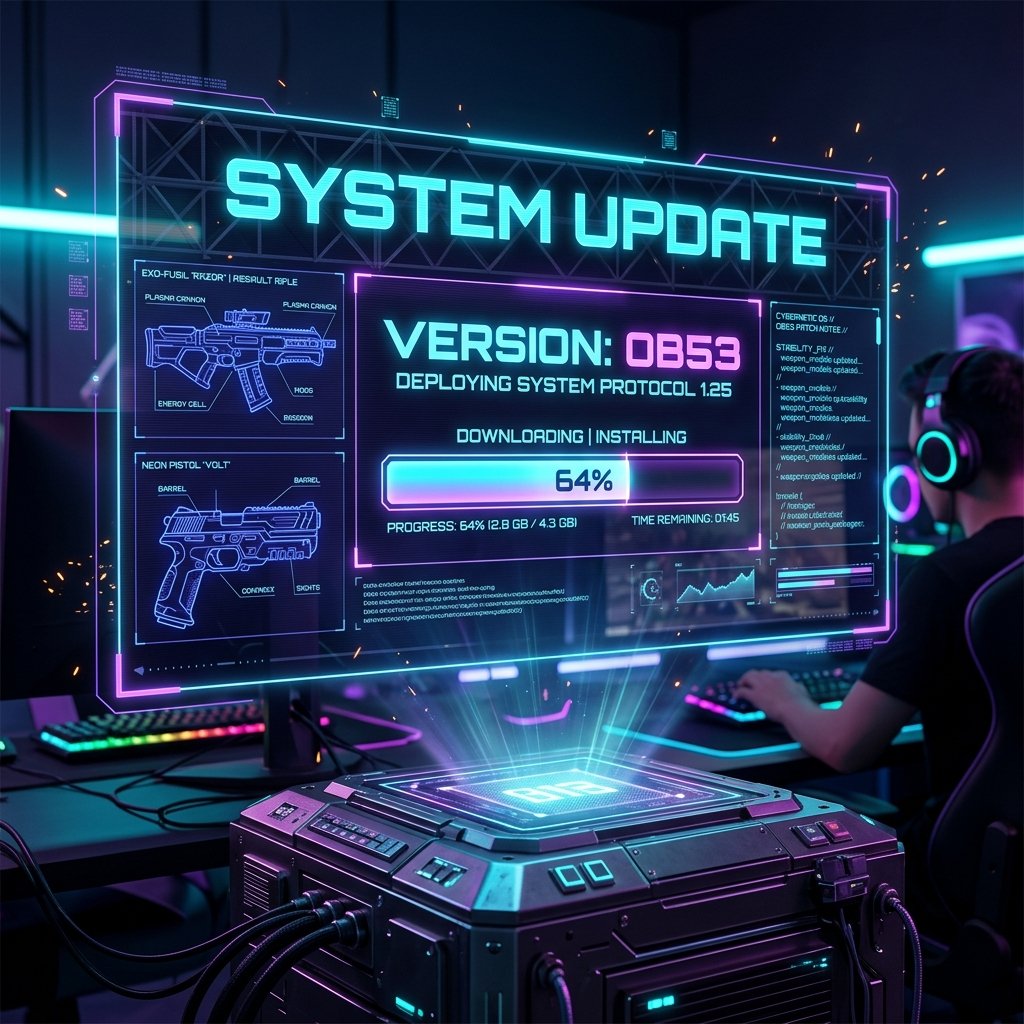
The OB53 update is not merely another seasonal patch for Garena's Free Fire; it is an architectural overhaul of the game's core network synchronizer, rendering pipelines, and anti-cheat binaries. This deep dive moves past basic patch notes to examine the actual client-server data synchronization protocols, Unity engine asset compression schemes, and low-level anti-cheat adjustments implemented in the latest build.
1. The OB53 Release Pipeline: Architecture and Staging
For a game with hundreds of millions of daily active connections, deploying a massive update is a complex operation. In game development, an Open Beta (OB) patch is the culmination of multiple internal pipelines. Garena manages this through a multi-stage compilation flow.
During the initial stages of compilation, the development team freezes the master branch of the repository, creating a separate release candidate branch. At this point, the game code is compiled using the IL2CPP (Intermediate Language to C++) toolchain. This converts the managed C# scripts of the Unity engine into native C++ code, which is then compiled into a highly optimized, target-specific machine binary (e.g., libil2cpp.so for Android's arm64-v8a architecture).
Before this native binary is distributed to the public through the Google Play Store, it is deployed to the Advance Server staging nodes. These staging nodes are physically and logically separated from the global production clusters. The data registry configuration uses independent database clusters, meaning that any character progression, telemetry logging, and stress-test crashes that occur during this staging phase do not impact live production user profiles. Developers monitor real-time exception logs, memory allocation metrics, and GPU draw-call counts before compiling the final production-ready Android App Bundle (AAB).
2. Client-Server Data Synchronization Protocols in OB53
In fast-paced battle royale games, network latency and synchronization are critical bottlenecks. The OB53 update introduces a rewritten network layer to resolve desynchronization issues (commonly known as "ghost hits" or "rubber-banding").
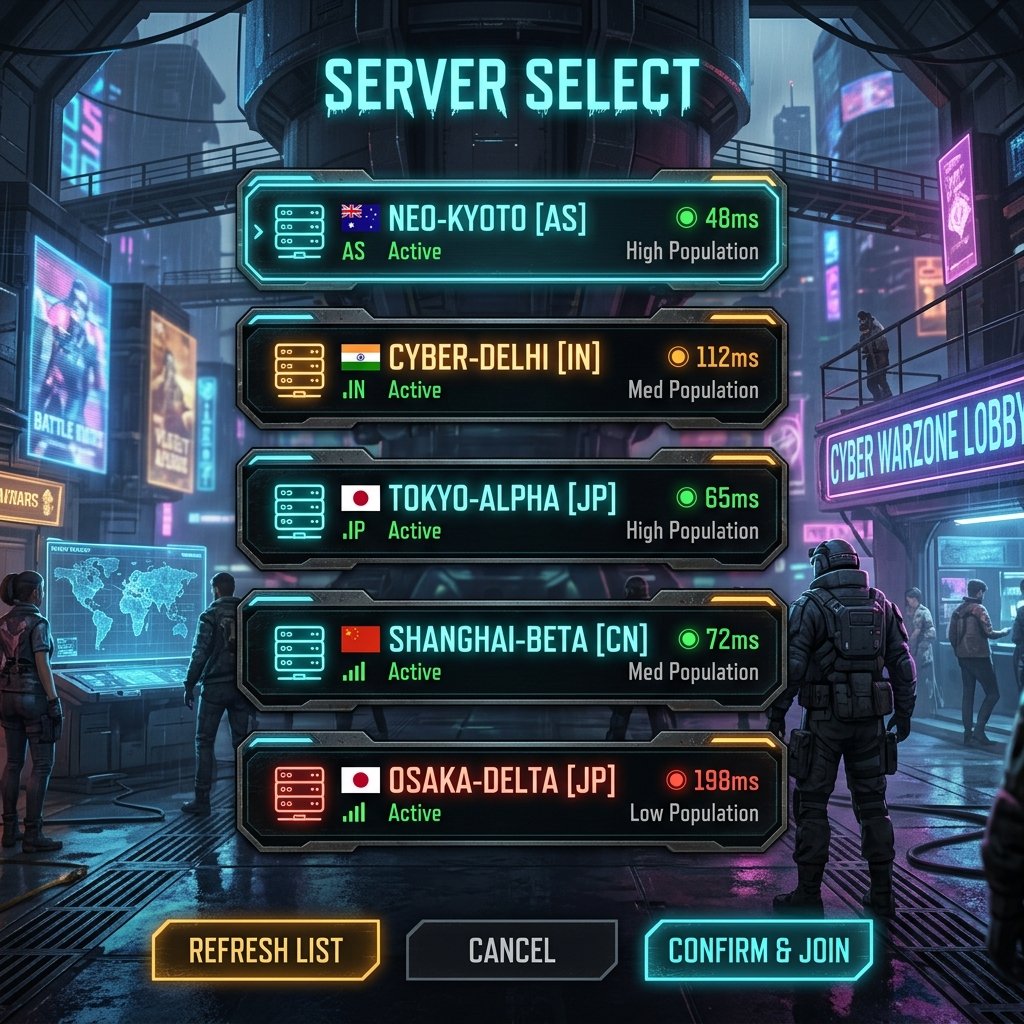
The OB53 network layer employs a hybrid transport model that multiplexes traffic across TCP and UDP sockets:
- UDP Socket Channel (Gameplay State): Real-time spatial coordinates, velocity vectors, projectile tracking, and hit detection are transmitted over a proprietary, lightweight UDP protocol. This protocol bypasses the overhead of traditional TCP handshakes, prioritizing speed. If a packet is dropped, the client does not wait for a retransmission; instead, the next state update overrides the stale frame.
- TCP Socket Channel (Transactions & Commands): Microtransactions, skin configurations, inventory actions, and chat logs are transmitted via standard secure TCP sockets. This guarantees zero packet loss and correct ordering for transactional state changes.
To optimize bandwidth and reduce tick-rate overhead, the OB53 client uses **Delta Compression** (also known as delta patching or differential synchronization). Instead of transmitting the entire state of the 50-player map every tick, the game server broadcasts only the differences (deltas) from the previous tick. For instance, if an opponent 300 meters away is stationary, the server sends a zero-motion vector flag, preventing redundant byte transmission.
Furthermore, the game's tick rate has been balanced from 20Hz to 30Hz on the Advance Server. This means the server updates the game state every 33.3 milliseconds, down from 50 milliseconds. This reduces input-to-render latency but demands more processing power from both the client's CPU and Garena's cloud server nodes.
3. Unity Engine Asset Compression and Extraction
A primary challenge for modern mobile games is storage optimization. With high-fidelity models, weapon textures, and voice files, Free Fire's uncompressed assets would easily exceed 5GB. To prevent app bloat, the OB53 update implements advanced compression techniques within the Unity asset pipeline.
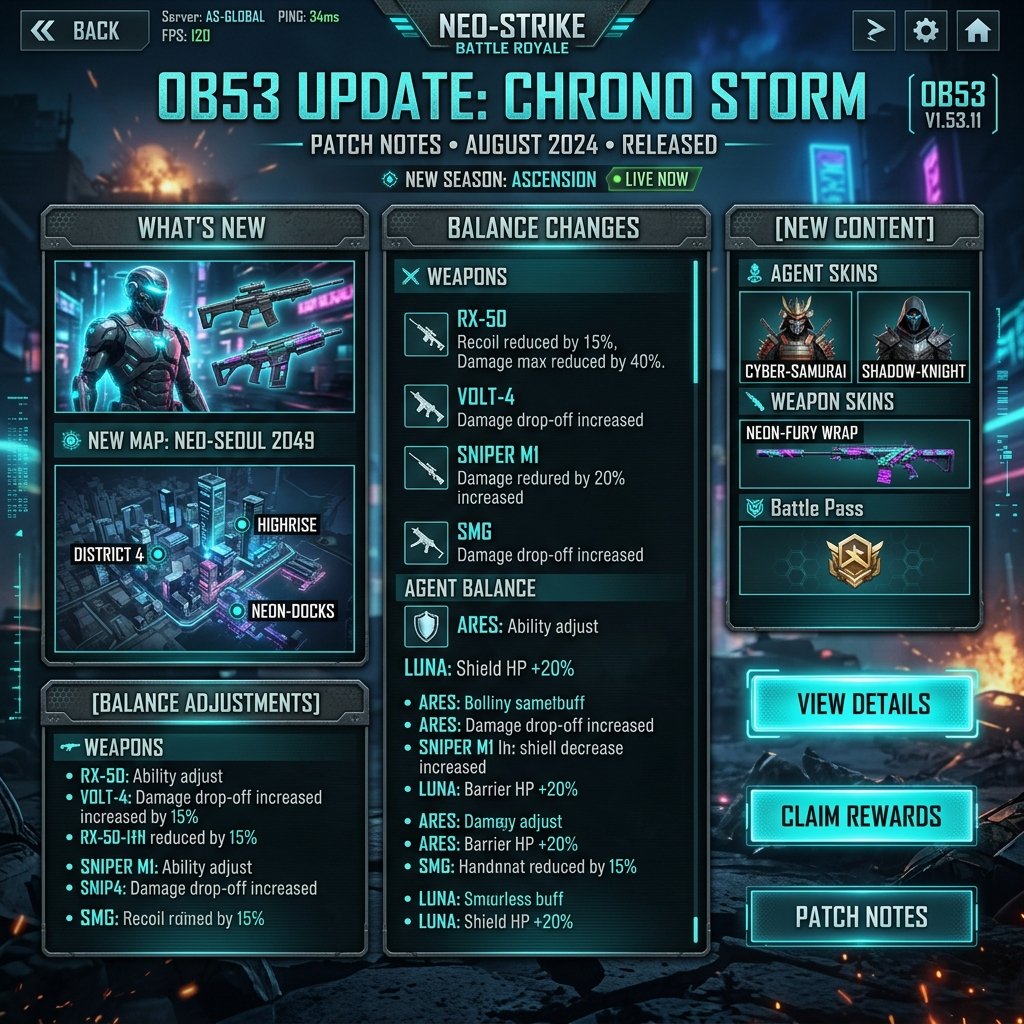
The update leverages Unity's Addressable Assets System coupled with **LZ4 compression**. Unlike the older LZMA compression scheme, which requires decompressing an entire archive to access a single file, LZ4 supports random read access. When the game engine requests a specific weapon model or character texture, it can stream the required byte block from the compressed asset bundle directly into the GPU memory buffer without decompressing the surrounding assets.
This is coupled with a **tiered asset loading structure** based on device hardware profiles:
| Hardware Tier | RAM Allocation Limit | Texture Mipmap Bias | Shader Complexity Profile |
|---|---|---|---|
| Low-End (< 3GB RAM) | Max 450 MB for assets | Bias: 2 (Quarter Resolution) | Mobile/VertexLit (Unlit fallback) |
| Mid-Range (4GB - 6GB RAM) | Max 900 MB for assets | Bias: 1 (Half Resolution) | Standard Mobile/Specular (No real-time shadows) |
| High-End (> 8GB RAM) | Max 2000 MB for assets | Bias: 0 (Full Resolution) | PBR Standard Shader (Dynamic real-time soft shadows) |
By dynamically adapting asset detail and shader math calculations based on these hardware categories, the OB53 client achieves stable framerates across both budget devices and high-end gaming phones.
4. Anti-Cheat Signature Upgrades and Cryptographic Integrity
Security is a top priority in competitive gaming. In the OB53 update, Garena has significantly upgraded its proprietary anti-cheat engine, commonly referred to as the **Dual-Detection Engine**. This engine operates through local client hooks and server-side heuristic analyzers.
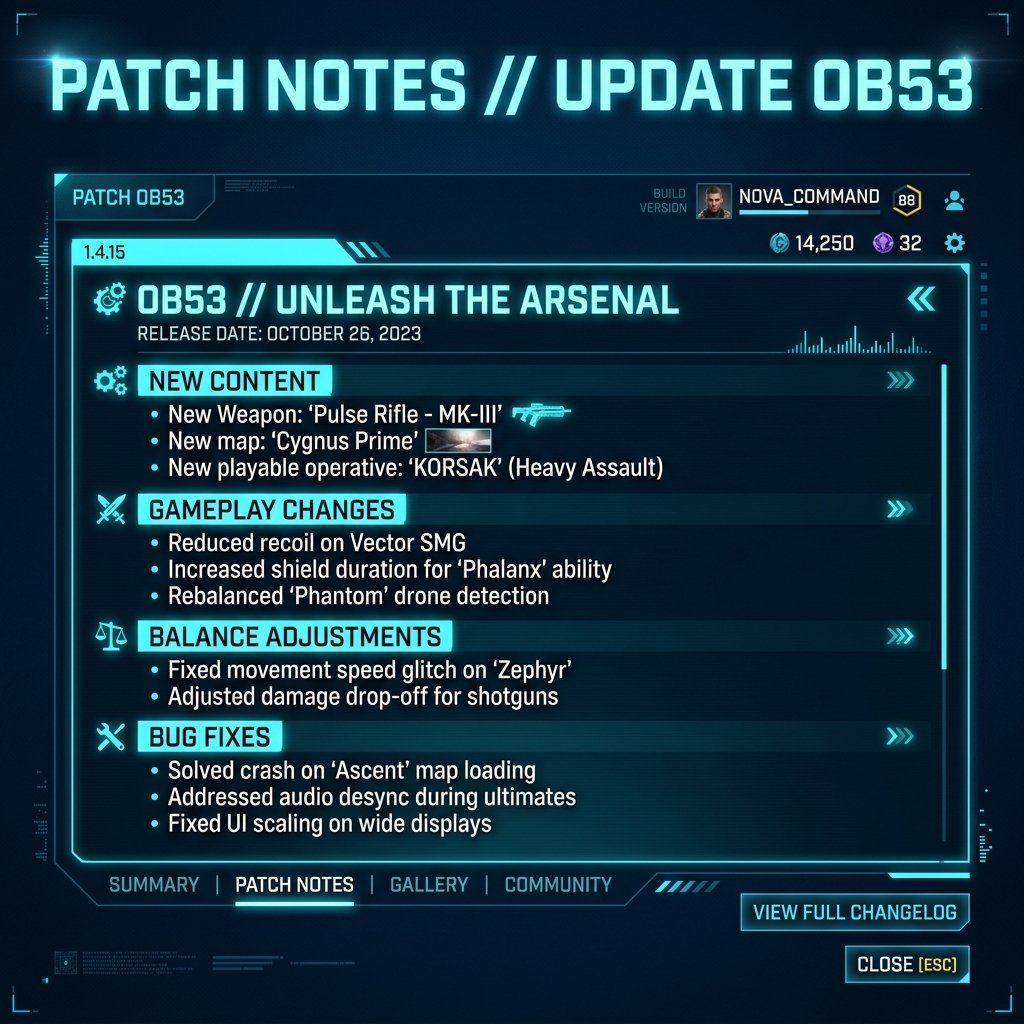
On the local client, the anti-cheat binary performs periodic **integrity audits of the virtual memory space**. It monitors the memory offsets of libil2cpp.so, looking for sudden modifications. If a third-party app attempts to inject memory modification scripts (such as modifying auto-aim offsets or removing weapon recoil by editing the floating-point values of weapon variables), the client instantly catches the mismatch and terminates the process.
Furthermore, Garena enforces strict **APK Cryptographic Signature Verification** during the handshake phase:
- SHA-256 Checksum Verification: When the app launches, it calculates the SHA-256 hash of its own code files and sends this hash to the authentication server.
- App Store Signature Audits: The game checks the installer origin using Android's PackageManager APIs. If the installation source does not match the Google Play Store (e.g., it was sideloaded from an unofficial site or file sharing server), the client flagged.
- Memory Pointer Obfuscation: Crucial gameplay variable pointers (such as player position vectors and current HP) are dynamically randomized in memory every frame. This prevents static memory search programs from locating and modifying them.
If these local checks are bypassed, Garena's server-side **Heuristic Gameplay Pattern Analyzers** act as a second layer of defense. These algorithms parse incoming coordinate vectors. If a character's horizontal velocity exceeds the hardcapped game threshold (e.g., moving at 100 meters per second), the server marks the behavior as anomalous and issues a hardware ban (HWID ban) based on the device's IMEI and MAC address hash.
5. Confirmed Character and Weapon Rebalance Formulas
To prevent the meta from becoming stale, Garena regularly adjusts weapon and character performance formulas. In OB53, these changes are driven by mathematical balance models.
The damage calculation formula for projectile hits in Free Fire follows a specific sequence of multipliers:
Final Damage = Base Damage × Hitbox Multiplier × (1 - Armor Reduction Coefficient) × Range Decay Multiplier
The OB53 patch modifies several of these coefficients:
Weapon Adjustments
- Vector (SMG): To curb its close-range dominance, Garena increased the **Range Decay Coefficient**. At distances greater than 15 meters, damage now drops off by 4.2% per meter, compared to the previous 3.1%.
- Woodpecker (Marksman Rifle): The base damage coefficient has been adjusted downward from 72 to 68. However, its **Armor Penetration Coefficient** was increased from 0.75 to 0.78, making it highly effective against high-tier Kevlar armor.
- M1887 (Shotgun): Hip-fire spread was increased by 8%, meaning players must rely on precise aiming rather than relying purely on close-range hip-fire spray.
Character Ability Balance
Character passive and active skills have also undergone adjustments.
- Wukong (Active - Camouflage): The movement speed reduction factor while transformed into a bush was adjusted from 10% to 15%. This makes players utilizing the bush transformation more vulnerable to area-of-effect explosives.
- Ray (New Active - Resonance Aura): Ray's skill projects an active dome with a radius of 15 meters. While inside, team members gain a flat 20% reload speed multiplier. However, the energy consumption limits the duration to exactly 10 seconds, with a 75-second cooldown cycle.
6. Environmental Physics and Movement Mechanics in OB53
Beyond balance tweaks, the OB53 patch updates the environment and traversal physics. The most significant addition is **Aquatic Combat** and physical mounts.
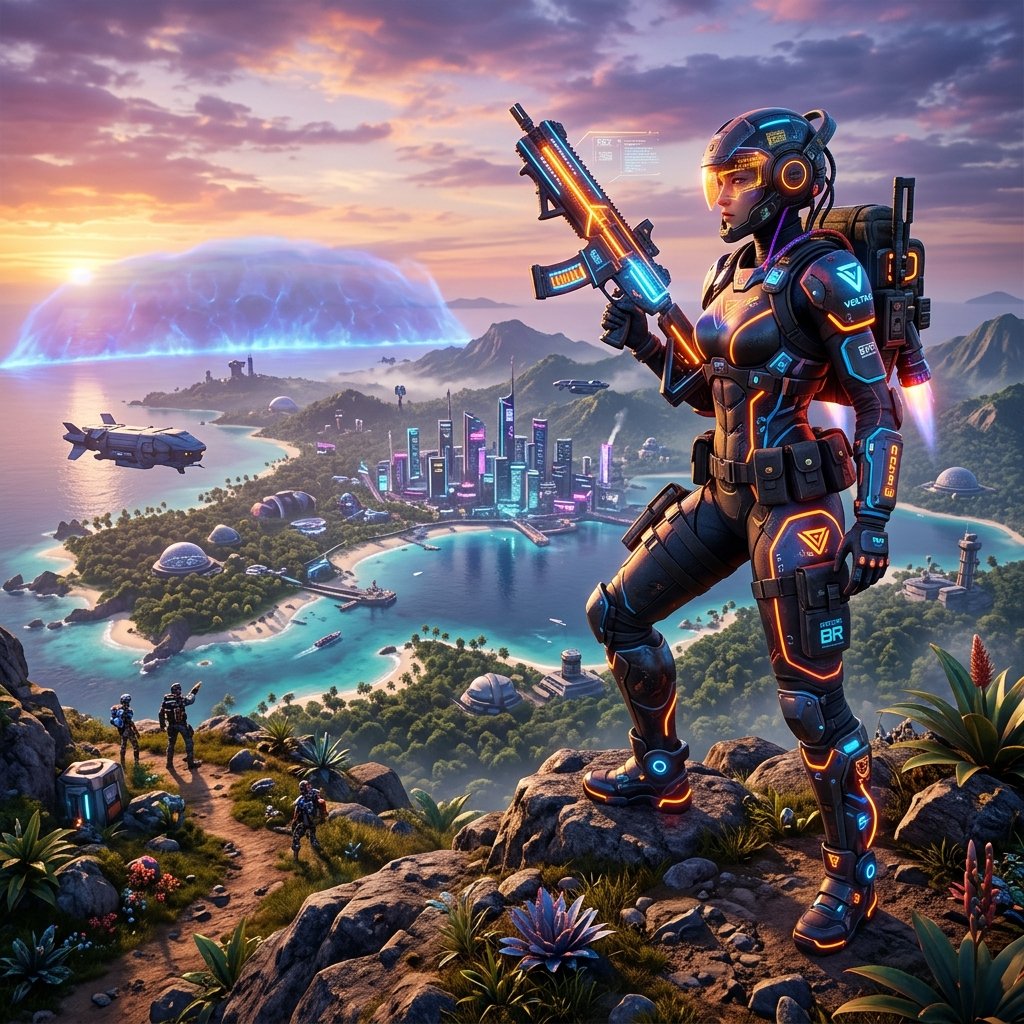
Previously, water bodies acted as basic collision planes with high friction constants. Moving through them simply slowed down the player. Under the new system:
- Buoyancy & Fluid Dynamics: Characters feature buoyancy variables. Submerging reduces your signature on opponent radars but depletes an oxygen gauge at a rate of 5 units per second (from a base pool of 100).
- Aquatic Drag Multipliers: Weapons fired while submerged suffer from high drag coefficients. Bullets lose velocity at three times the speed of normal air travel. Heavy sniper rifles are disabled underwater, forcing players to rely on pistols, melee items, or specialized harpoon weapons.
- Mounted Mount Physics: The new horse mount features a dedicated velocity curve. Unlike motor vehicles, which have instant torque but struggle on vertical slopes, the mount maintains consistent velocity vectors on steep hills, though it has a lower top speed on flat paved roads.
These features require players to plan rotations carefully. Crossing rivers in Bermuda or Purgatory is no longer a simple transit; it is now a tactical zone with distinct combat rules.
UI and Quality of Life (QoL) Optimization Models
Alongside physical traversal changes, the OB53 patch brings optimization upgrades to the HUD (Heads-Up Display) and settings menus. The layout rendering engine has been rewritten to support dynamic aspect ratio scaling, ensuring that custom control layouts do not overlap on devices with camera punch-holes or rounded display edges. Additionally, Garena has introduced a "Smart Ping 2.0" system. This system uses machine learning heuristics to automatically prioritize game pings based on context. For example, pinging a level-3 armor vest when a teammate nearby has damaged or low-tier armor will automatically trigger an audio cue and highlight the item with a higher priority outline, reducing the need for voice coordination in fast-paced squad matches. This ensures that team communication remains fluid and highly efficient during intensive combat scenarios where typing is impossible.
Furthermore, the settings menu now includes a "Network Jitter Mitigation" toggle. When activated, this setting increases the client-side extrapolation window by 50 milliseconds. While this slightly increases local latency, it significantly reduces the visual "teleporting" of opponents when playing under highly unstable mobile network connections (high jitter). This is particularly useful for players in rural regions or those relying on shared cellular bands.
7. Summary: Accessing OB53 Safe and Authenticated
As the OB53 update nears release, unofficial downloads claiming to offer "Astute Beta OB53 APK" or "cracked early access builds" will continue to appear on file sharing sites. From a technical security standpoint, installing these files is risky:
- Malicious Wrappers: Many third-party APKs are injected with Trojans or keyloggers that monitor login inputs.
- Server Rejection: Even if a modified client runs, Garena's server-side handshake checks will reject the connection because the cryptographic signature does not match.
- Account Bans: Sideloading modified clients or injecting unofficial game files violates Garena's Terms of Service and will trigger permanent HWID bans.
To test new features safely, register for the official Free Fire Advance Server via ff-advance.ff.garena.com, or wait for the official global release to roll out on the Google Play Store or Apple App Store.